Auction House
An Android game with a player-driven economy: sealed lots of gems, art, cars and more, with the feel of a high-end auction house.
- Year
- 2026
- Role
- Design and development
- Built with
- Kotlin · Jetpack Compose
- Status
- In development
The economy, tested before the code.
A player-to-player trading game dies in one of two ways: there's nobody to trade with at the start, or money inflates until it means nothing. It's usually found out too late, with the game already built. The first version of this economy failed exactly like that: prices collapsed and all three simulated players went broke.
A 30-day simulation with 5 runs, 3 trading houses and 3 simulated players; the catalog, counted in the game's data.
Drag to compare
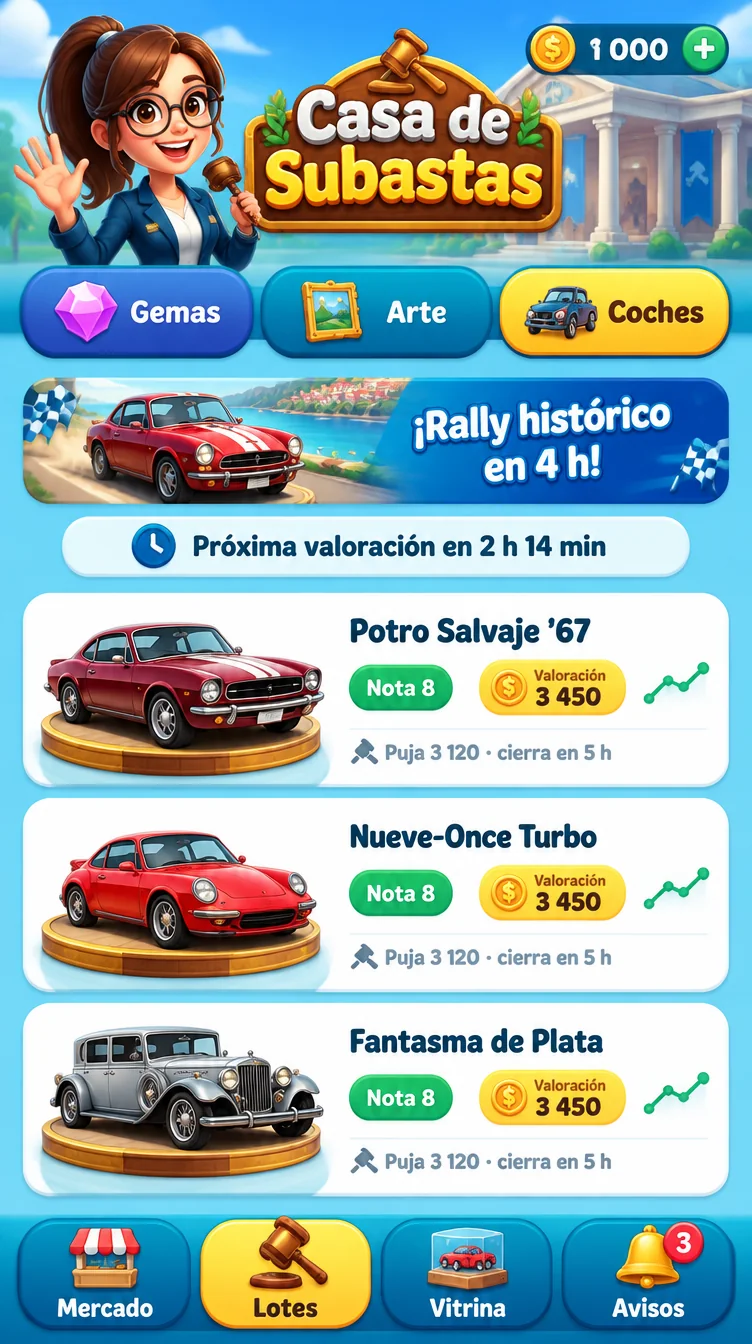
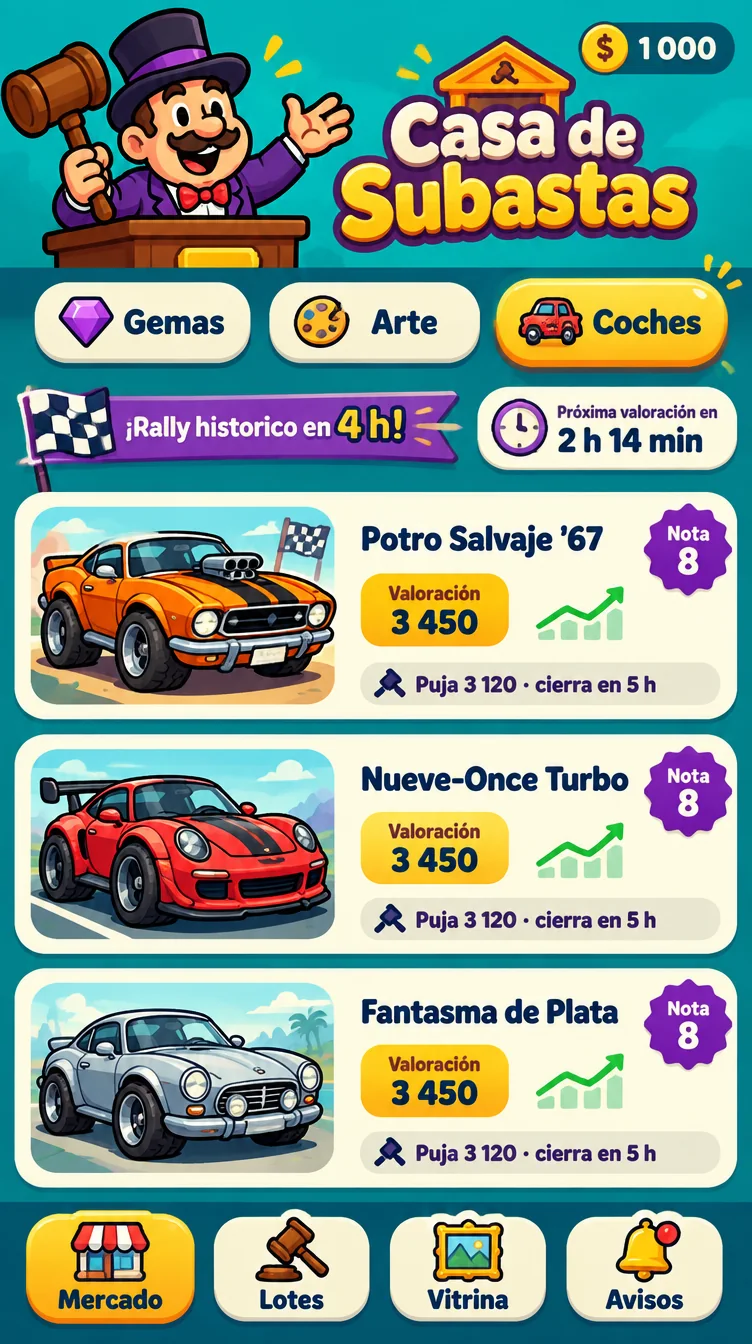
Bid on a lot
A short version: one lot, a trading house bidding against you and a 12-second hammer.
- 01Check the price
Every 4 hours a public appraiser re-values each piece, with the rules in plain sight. World events are announced one cycle ahead.
- 02Buy, sell or hold
You bid, list your piece or keep it. If you want out now, a trading house will always buy it at the floor price.
- 03Open a sealed lot
A geode, an attic, a barn find: each lot publishes its odds, and you choose how much risk to take.
- Trading houses that present themselves as what they are, never disguised as people. They guarantee there's someone to trade with from day one.
- The economy was tested in a simulation before coding it. The first version collapsed, and three rules came out of it: houses are the world's demand, scarcity has a ceiling and prices return to a reference value.
- Lots by rarity tier instead of a single one: with one lot, a 1% piece turned it into a lottery and decided the whole month.
- Still in development: today you play on the phone against the trading houses. Trading between players comes in the next phase, with a server.
- The simulation tests the rules with simulated players. It still needs real people to show they can read the market.
If you're launching something where people buy, sell or build up value (a game, a points program, a marketplace), this project proves the rules can be simulated and fixed before building, while it's still cheap.
Build your project in four questions →